|

 1788 Philadelphia
| Antique Pens and Accessories |
Antique Pens and Accessories

1893 Billhead
Antique Pens
Quill Dip Pens: Quill pens were in use
by the year 600. "Renaissance and earlier depictions of scholarly gentry
or saints in their studies often show them at a bookstand on a pillar with a pen
in one hand and an ink pot in the other." (Mark Bridge, An
Encyclopedia of Desks, 1988, p. 9) We have seen English advertisements for quill
pens from c. 1742 to c. 1814-26? (John Johnson Collection Exhibition 2001,
Bodleian Library, University of Oxford) and 1855 (Catalog, Waterlow & Sons,
London), a US illustration from 1788 (above), and a
US receipt from 1811. One of the problems with quill pens is that a good
deal of skill was required to turn a quill into a good pen and to maintain it in
good working order. Zakim recently stated that "after 1820 it become
possible to purchase ready-made versions [of quill pens] that were easily
replaced once they wore out." (Michael Zakim, "The Business
Clerk as Social Revolutionary," n.d.) Quill pens were still popular in
the mid-19th century, and we have seen US advertisements from 1847 to 1884. (Hagley
Museum and Library)
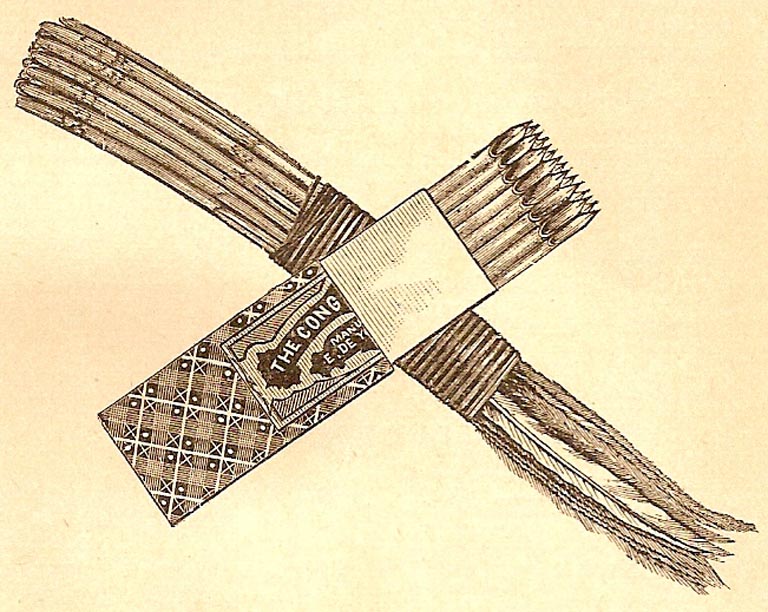
Quill pens, 1883 ad
Steel and Gold Dip Pens:
An 1890 study by Bore indicates that a relatively small number of handmade steel pens FoxTutors.com
(nibs) were used in the 18th century, but that the first commercially
successful steel pens were made by James Perry beginning around 1819.. Steel
pens were first made by machine by John Mitchell, Joseph Gillott, and
Josiah Mason around 1830. All four of these men were English. (Henry Bore, The
Story of the Invention of Steel Pens, New York, Ivison, Blakeman, 1890)
Thus, the volume of steel pens produced was negligible until the 1830s, and the
quill pen ruled. Zakim recently wrote, with reference to the early 19th
century, "Many contemporaries insisted that a hard quill with a clear
barrel, kept well mended, remained the best tool for writing. .... Metal pen
manufacturers subsequently sought to duplicate the 'soft feeling' and 'freedom
of action' characteristic of a fine quill...."
The earliest English advertisement we have seen for a steel
pen dates from c. 1814-26 (John Johnson Collection). The earliest US advertisement we have found was received
by a potential customer in 1847. The latter advertised Gillott's, Windle's, and
Perryian steel pens. A gold pen won a prize at the 1851 exposition in
London. Gold pens and Perryian silver pens were advertised in the 1855 catalog of Waterlow &
Sons, London. Steel pens made by Gillott and gold pens made by Hayden were
advertised by Thomas Groom & Co, Boston, in 1856. In
1864, Henry Owen, New York, NY, advertised Gillott's steel pens.
Esterbrook & Co. began production of steel pens in the US in 1860.
Before that, according to an 1866 statement by Esterbrook, almost all steel pens used in the US were imported, and attempts by
US firms to enter the market were unsuccessful. During 1866, steel pens
were advertised by the Easterbrook Steel Pen Manufacturing Co., Camden,
NJ. During 1866-68, gold pens were advertised by Rubber Clothing Co, New
York, NY, and Benton & Brother, Philadelphia, PA.
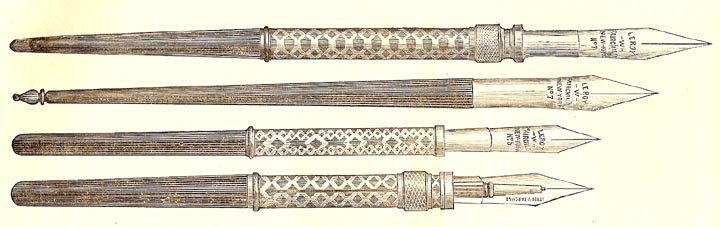
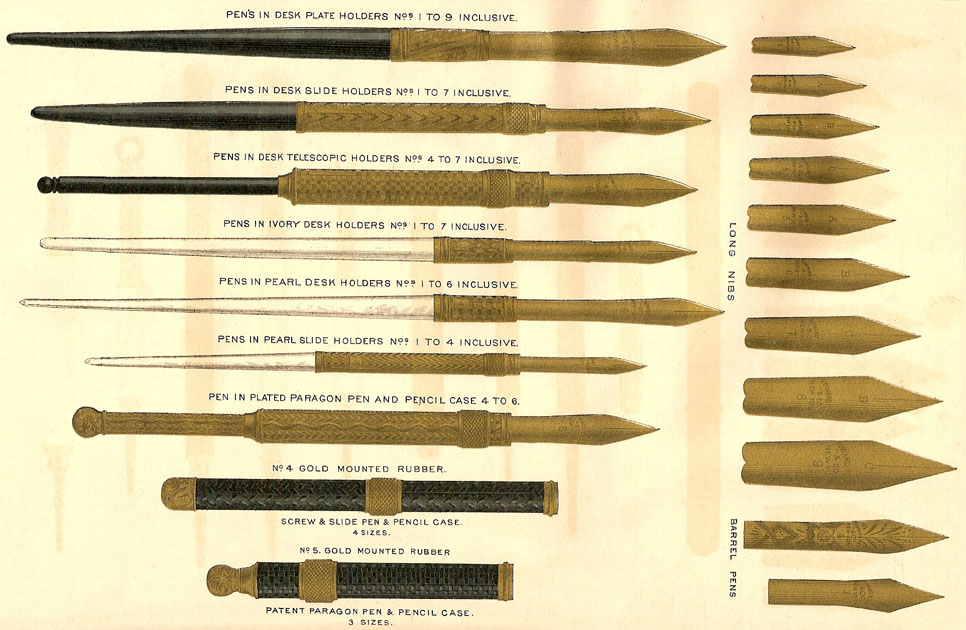
Use of steel and gold pens (nibs) required pen-holders, and it follows that pen-holders were available as early as the nibs. Gold, silver, ebony, rosewood, and other pen-holders were advertised in the 1855 catalog of Waterlow & Sons, London. In the US, gutta percha pen-holders were advertised by Geo. N. Davis & Brother, Boston, MA, in 1856 (Illustrated and Descriptive Catalogue and Trade-Price List of India Rubber and Gutta Percha Goods, p. 55); also, pen-holders were advertised by the Esterbook Steel Pen Mfg. Co. in 1867 and the Rubber Clothing Co. in 1868.
|
|
|
|
|
|
|
|
|
|
|
. |
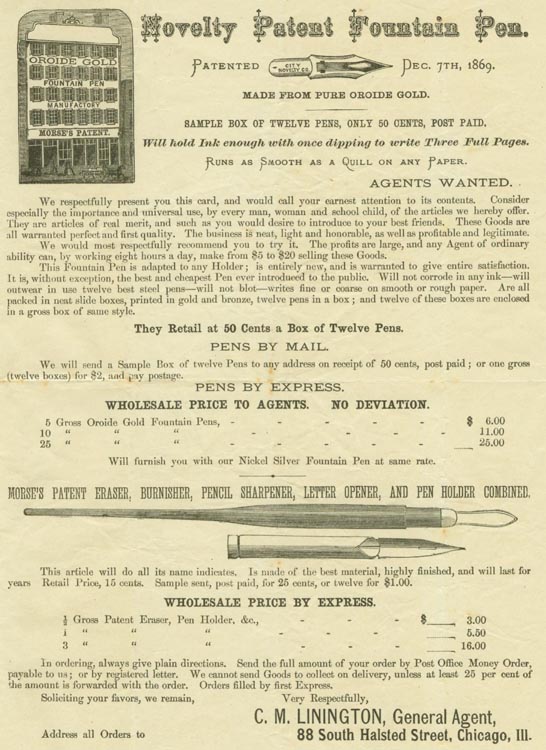


Fountain Pens: Reservoir or fountain pens were
introduced in the 17th and 18th centuries, and Thomas Jefferson used a silver reservoir pen
made in 1824. A number of patents for fountain pens were awarded during the
course of the 19th century, e.g., U.S.
Patent No. 3253, which was awarded to Nelson Bartlett in 1843. However,
Zakim reports that there were complaints "about the tendency of the new
[fountain] pens to unexpectedly dry up, or to leak, or to fail to throw out the
requisite quantity of ink."
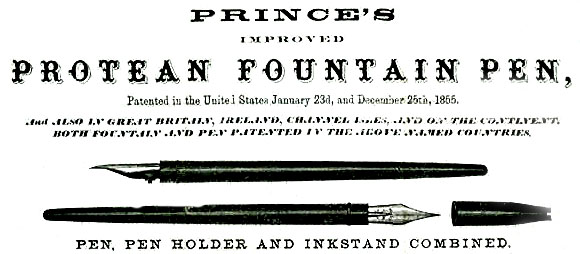
Fountain pen, patented 1855, advertised 1865
The first successful fountain pen was patented by Lewis
E. Waterman in 1884. Fountain pen sales by the L. E. Waterman Pen Co., the Paul
E. Wirt Fountain Pen Co., and others were substantial from that year on.
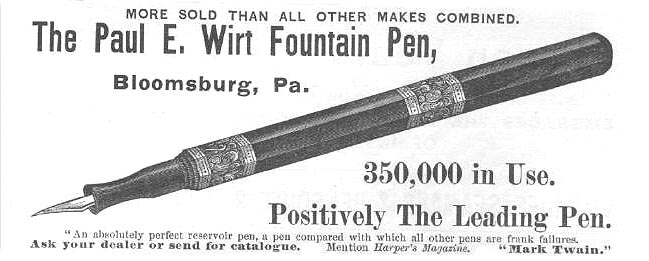
In 1890, Wirt advertised (below) that 350,000 of its pens were in use.
The photograph below shows a Swan No. 2 eyedropper fountain pen with a screw on safety cap, ink filling glass pipette, and box. Mabie Todd and Co. Ltd. introduced its safety screw-on cap model in 1911. For more Swan pens, go to the Fountain Pen Emporium and Mabie Todd Swan Pens web sites.
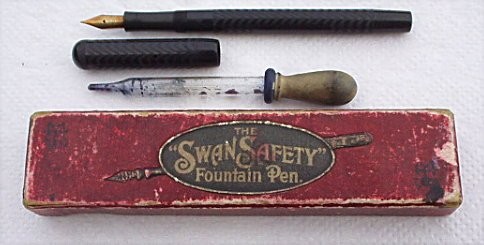
Photograph courtesy of the Fountain Pen Emporium

1931 Billhead
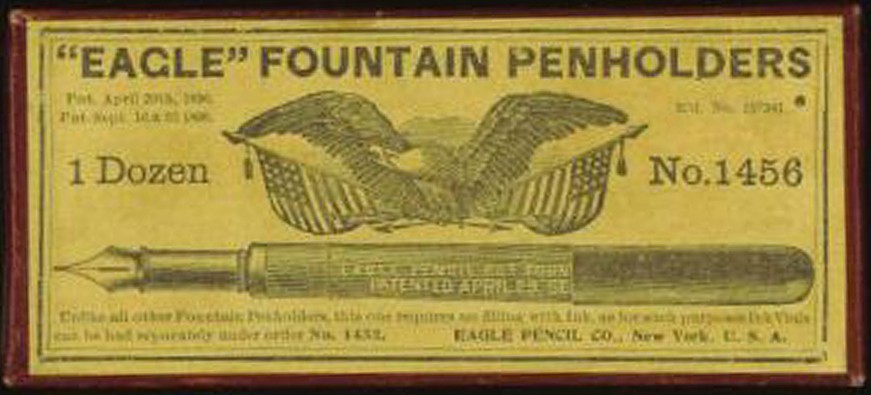
Eagle Fountain Penholders, Eagle Pencil Co., New York, NY
Antique Ink Bottles
Writing inks have been used for something like 2,500 years. Thaddeus David began producing ink in New York City in 1824. The earliest advertisement English advertisements we have found for writing ink date from c. 1742 to c. 1814-26? (John Johnson Collection); we have seen a US receipt for purchase of ink powder from 1811; the earliest US advertisement we have found dates from 1847. Writing inks were advertised by Waterlow & Sons, London, in 1855, and Arnold's, Hoover's, Maynard & Noye's, Morrisson's, and Werkshagen's writing inks and fluids were advertised c. 1858. (Hagley)
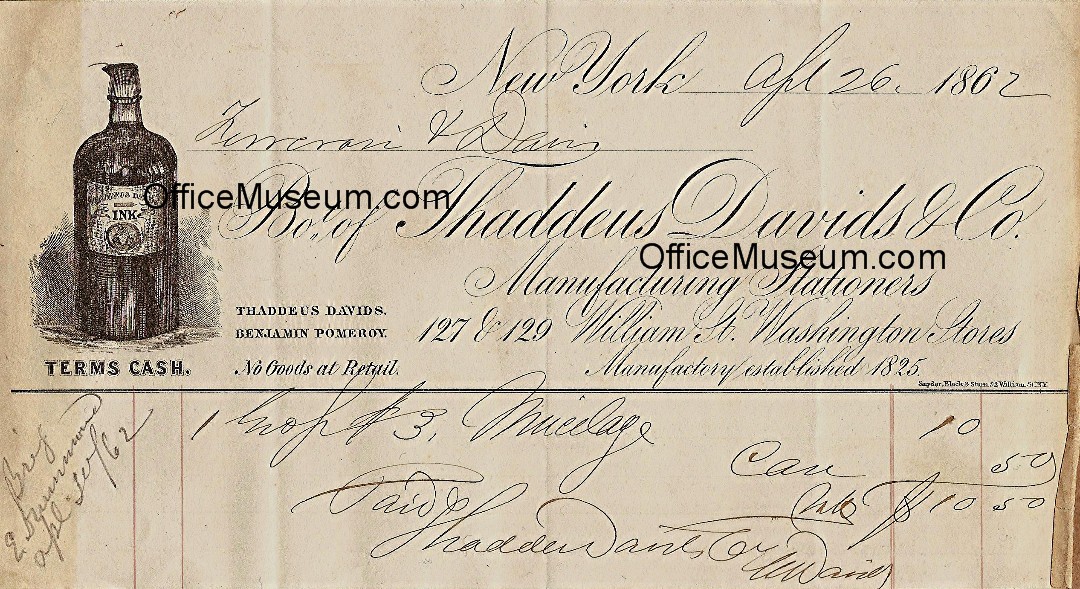 Thaddeus Davids Co., 1862 billhead |
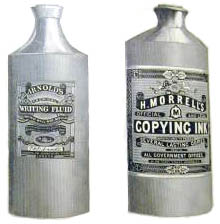 Corlies, Macy & Co, NY, NY, 1874 catalog
|
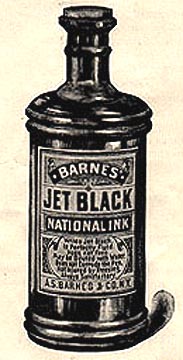 A. S. Barnes & Co, NY, NY, catalog |
 Emry Davis Writing Fluid, 1896 ad |
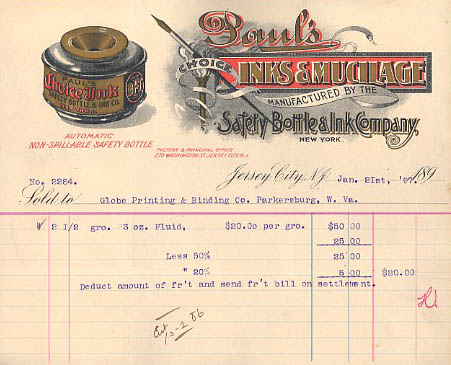 Safety Bottle & Ink Co, Jersey City, NY, 1897 billhead advertising Paul's Inks & Mucilage and the Automatic Non-Spillable Safety Bottle |
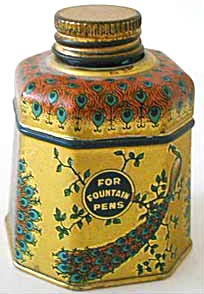 Signet Peacock Blue Ink, Russia Cement Co., Gloucester, MA |
. | . |
Antique Ink Wells and Stands
The earliest English advertisements we have found for ink stands date from 1783-85 and c. 1814-26? (John Johnson Collection); the earliest US advertisement is dated 1847 (Hagley). The earliest patent we have found for an ink well is 1858. Of course, ink pots existed long before the 18th century.
![[photo] See caption below for details.](IMagesWWW/inkstand.jpg) Silver inkstand used in the signing of the Declaration of Independence, made by Philip Syng, 1752 Courtesy of National Park Service, Museum Management Program and Independence National Historical Park. |
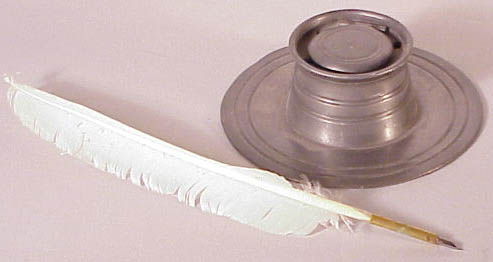 Pewter Ink Stand and Quill Pen
|
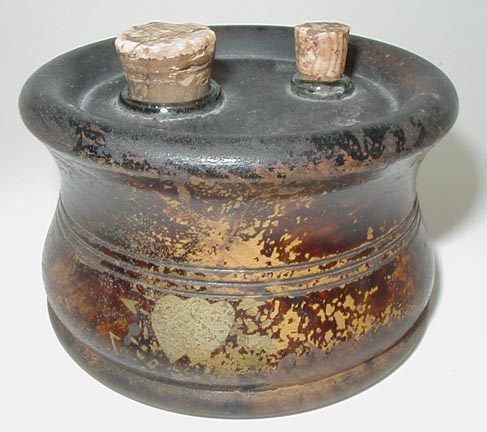  Counting-House "Academic" 2-Well Inkstand (left) & Barrel Traveling Inkstand (right), S. Silliman & Co., Chester, CT, advertised 1854. The academic inkstand originally was $0.33, while the traveling inkstand was $0.20. |
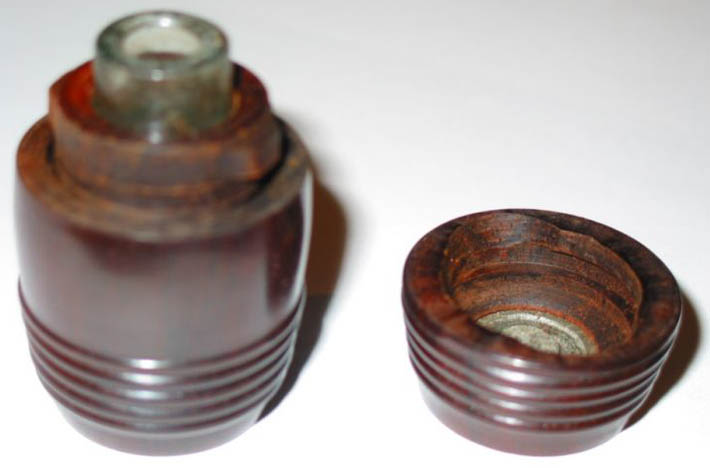
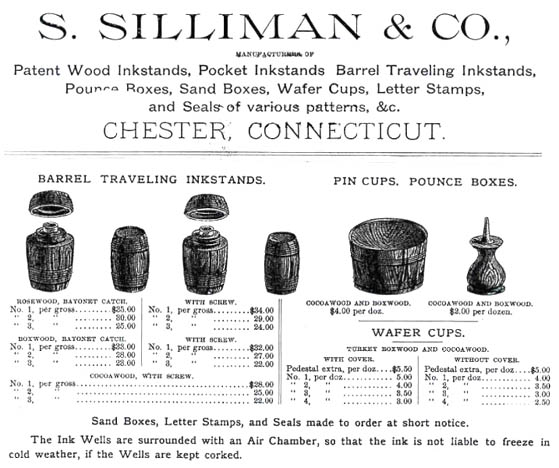 Barrel Traveling Inkstand, S. Silliman & Co., Chester, CT, advertised 1854. Also advertised 1883. Silliman's, Fry's, Whitney's, and Draper's inkstands were advertised c. 1858 Geo. N. Davis & Brother, Boston, MA, advertised circular rubber inkstands in 1856. (Illustrated and Descriptive Catalogue and Trade-Price List of India Rubber and Gutta Percha Goods, p. 55) |
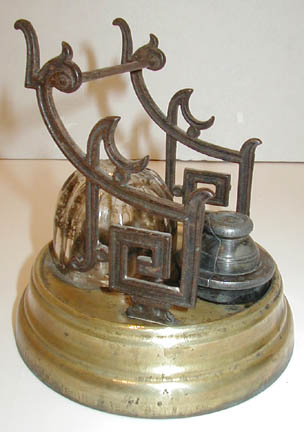 Barometric Ink Stand, patented 1861-67 by Thomas Hudson, advertised 1878-81, still marketed in 1911. In 1905, it was manufactured by Cutter Tower Co., Boston, MA, which said at the time that the inkstand had been sold continuously since 1861. |
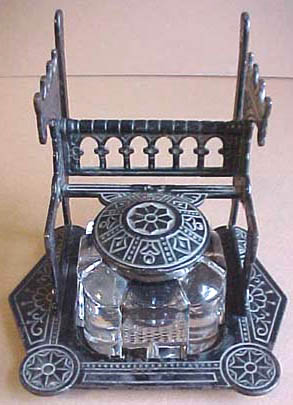 H.L Judd Manufacturing Co., Brooklyn, NY, and Wallingford, CT, patented 1879, advertised 1883-1916 |
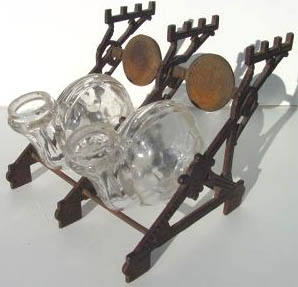 Advertised 1878-1916 |
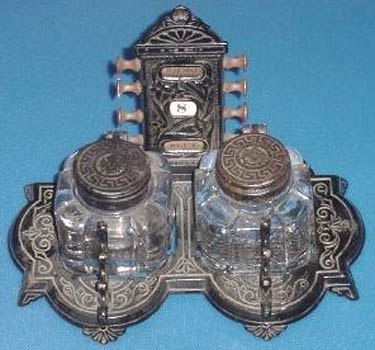 |
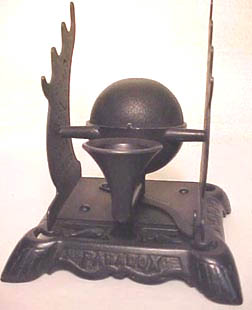 Irving's Paradox Ink Stand |
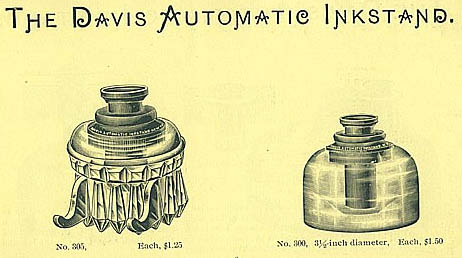
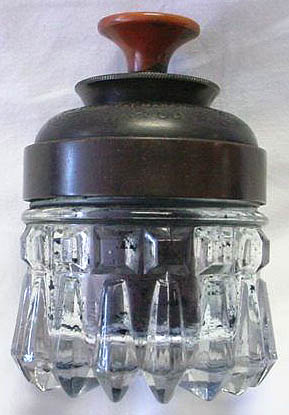 Davis Automatic Ink Stand, Emry Davis, NY, NY, patented 1889, advertised 1891 |
|
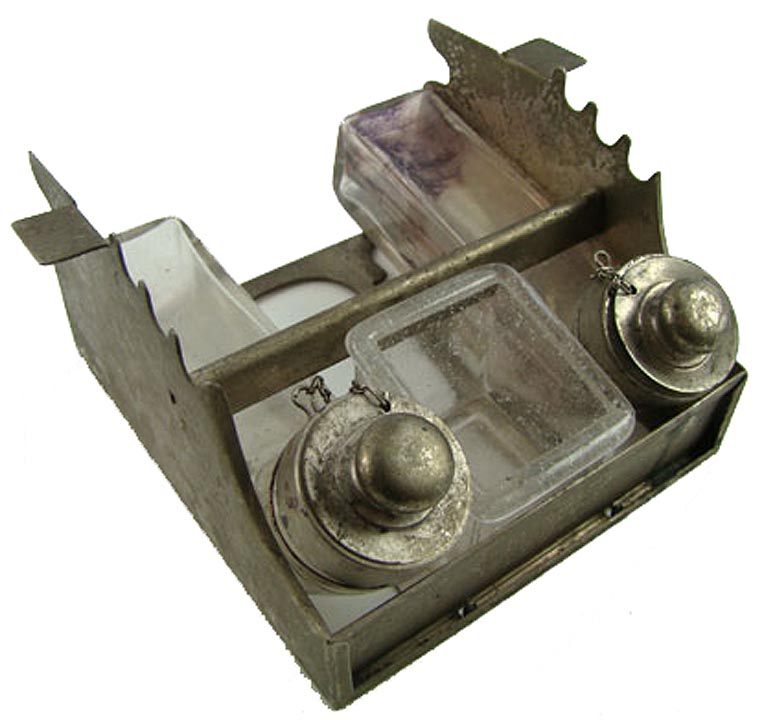 Hayne Suspended Inkwell, Universal Specialty Co., New York, NY, 1897 |
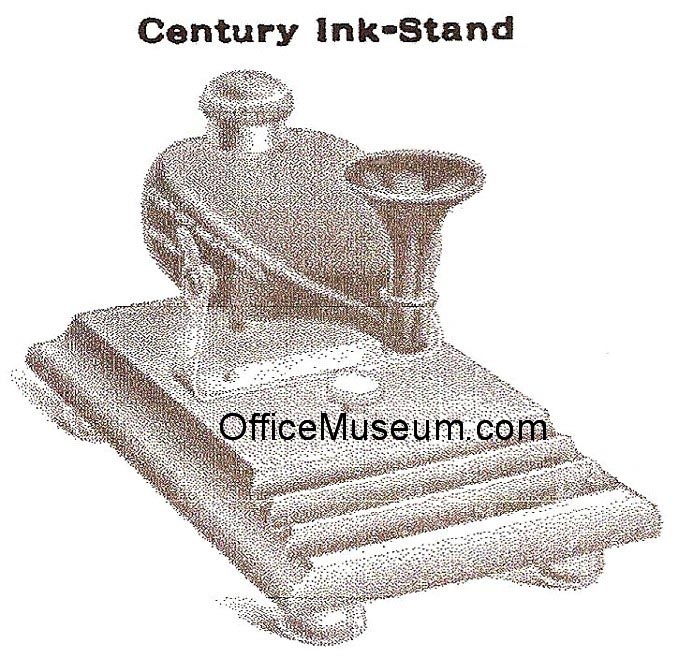 Century Inkstand, 1892 ad |
|
. |
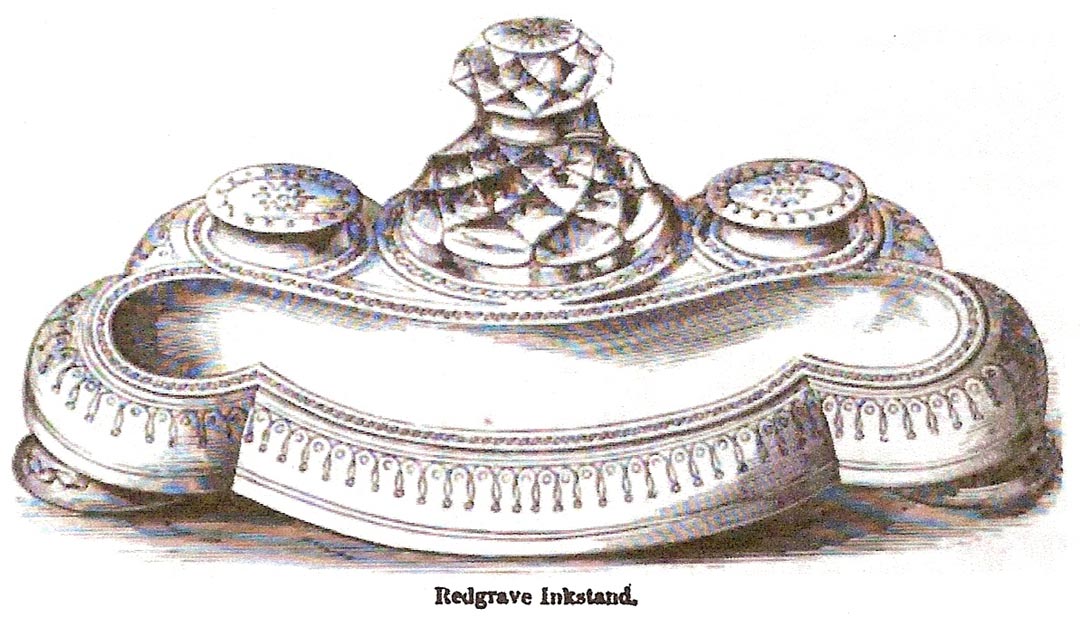
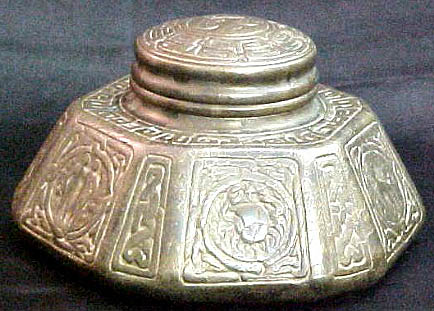
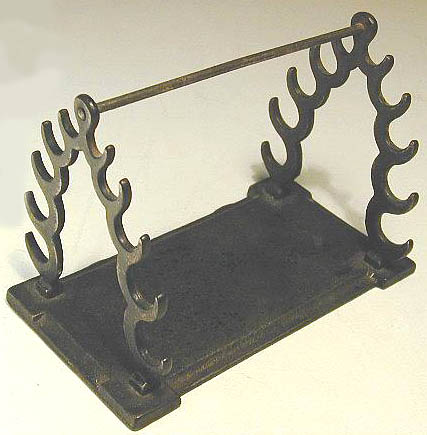
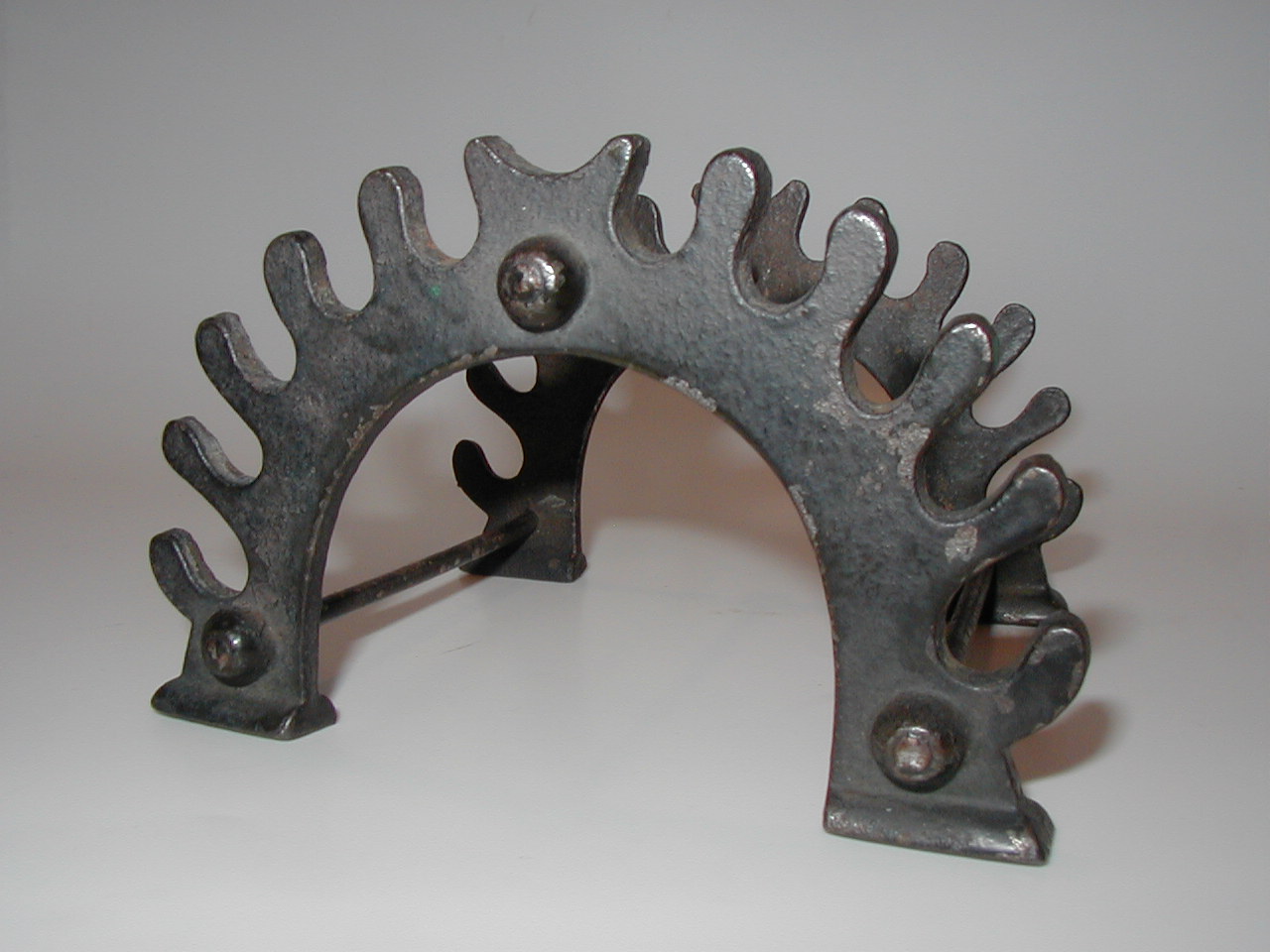
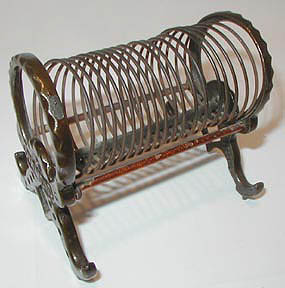
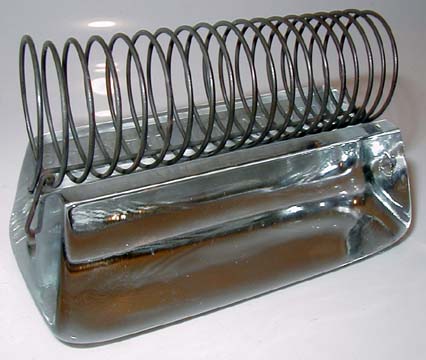
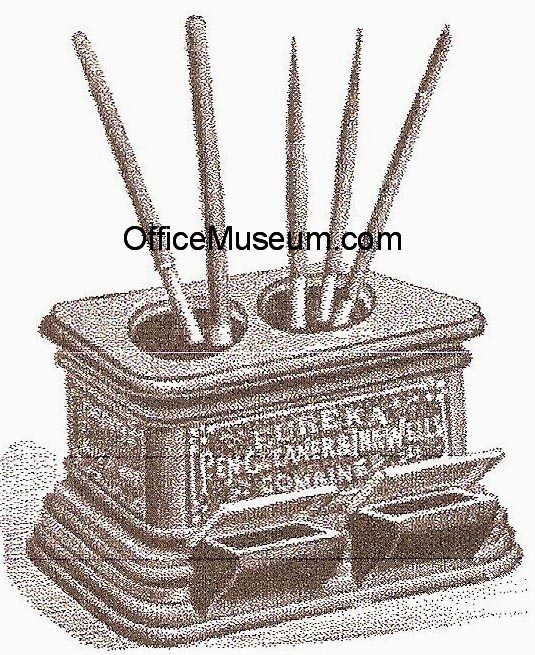
Antique Pen Racks
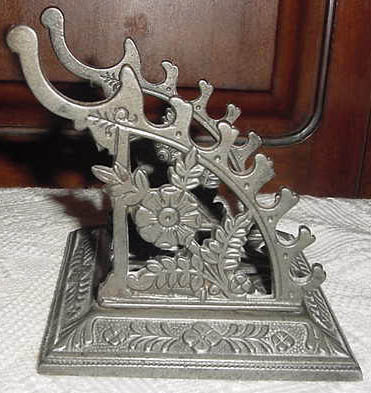
Pen racks were advertised by Waterlow & Sons, London, in
1855. In the late 1860s, Wm. Staehlen, New York, NY, advertised "French
Pen Racks."
Several of the ink stands pictured above also have pen racks.
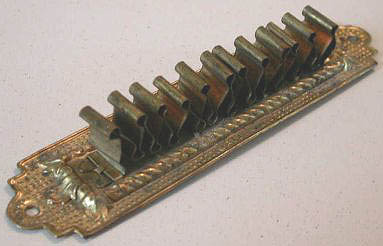 J. M. Keep, patented 1868, advertised 1881 |
 |
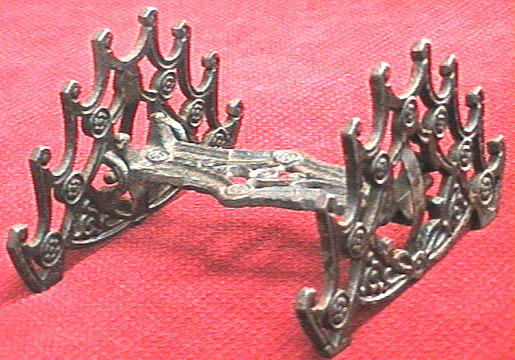 Folding pen rack |
|
|
|
|
| . |
|
. |
Other Pen Accessories
|
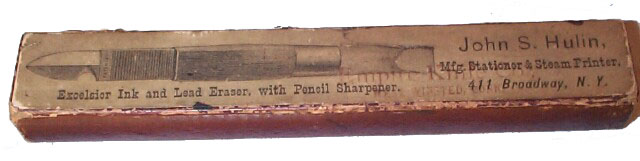
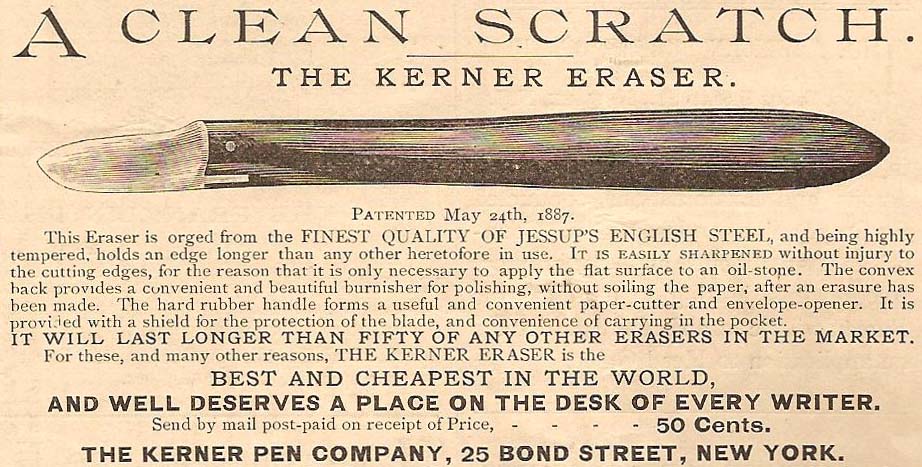
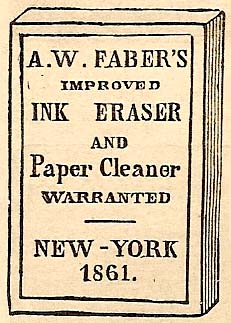
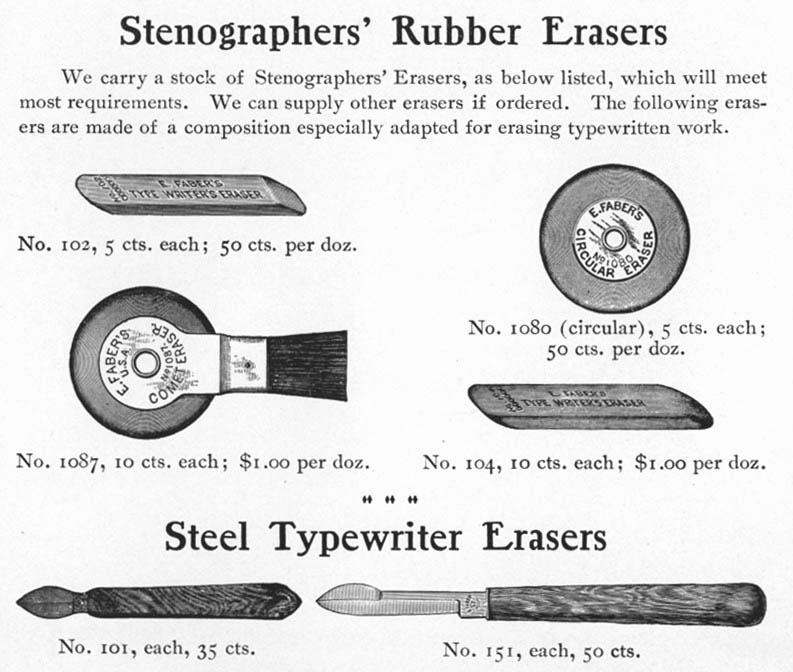
Ink Erasers |
Pen Extractors |
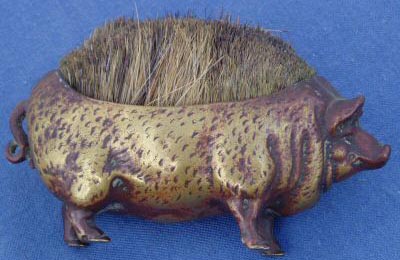
Pen Wipes and Cleaners |
|
The Hagley Museum and Library has advertisements for ink
erasers with metal blades dating to 1847, c. 1858, and 1878. |
Pen Extractors were used to remove steel pen
points from penholders. Image coming |
It in important to clean the nibs of dip pens after they
are used, and a wide variety of pen wipes were patented and sold for
this purpose. |
| Pounce Pot or Sander | Pen-knife |
Blotting Paper |
The Hagley Museum and Library has 1847 and c. 1858 ads for writing
sand and a c. 1850-60 ad for black sand and sand boxes.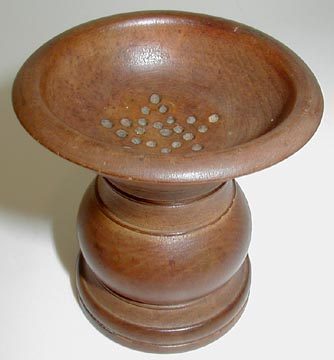 |
The Hagley Museum and Library has an 1847 ad for Rodger's pen-knives and a c. 1858 ad for Rodgers and Sons pen-knives. | Blotting paper is mentioned in U.S. Patent No. 10,933
(1854). (The preceding patent is not for blotting paper.) We have seen an 1869 record for purchase of blotting paper. |
|
Rocker Blotter |
. | |
In 1857, U.S. Patent No. 17,477 was awarded to Reuben G.
Allerton for the following rocking blotter: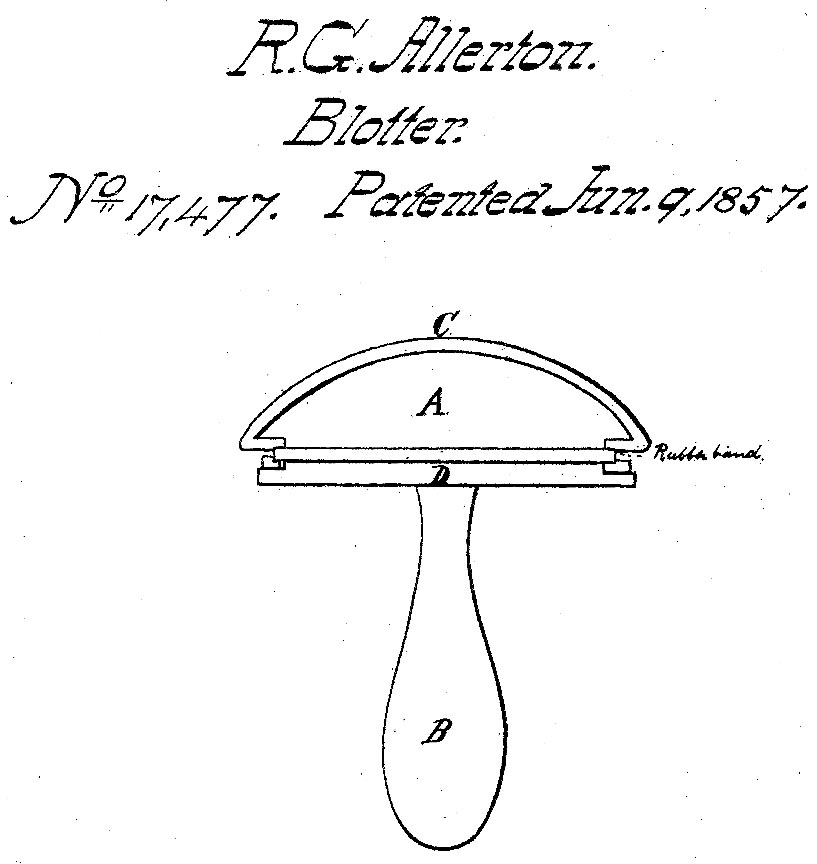 In 1865, U.S. Patent No. 51,337 was awarded to Charles C Moore for another rocking blotter: 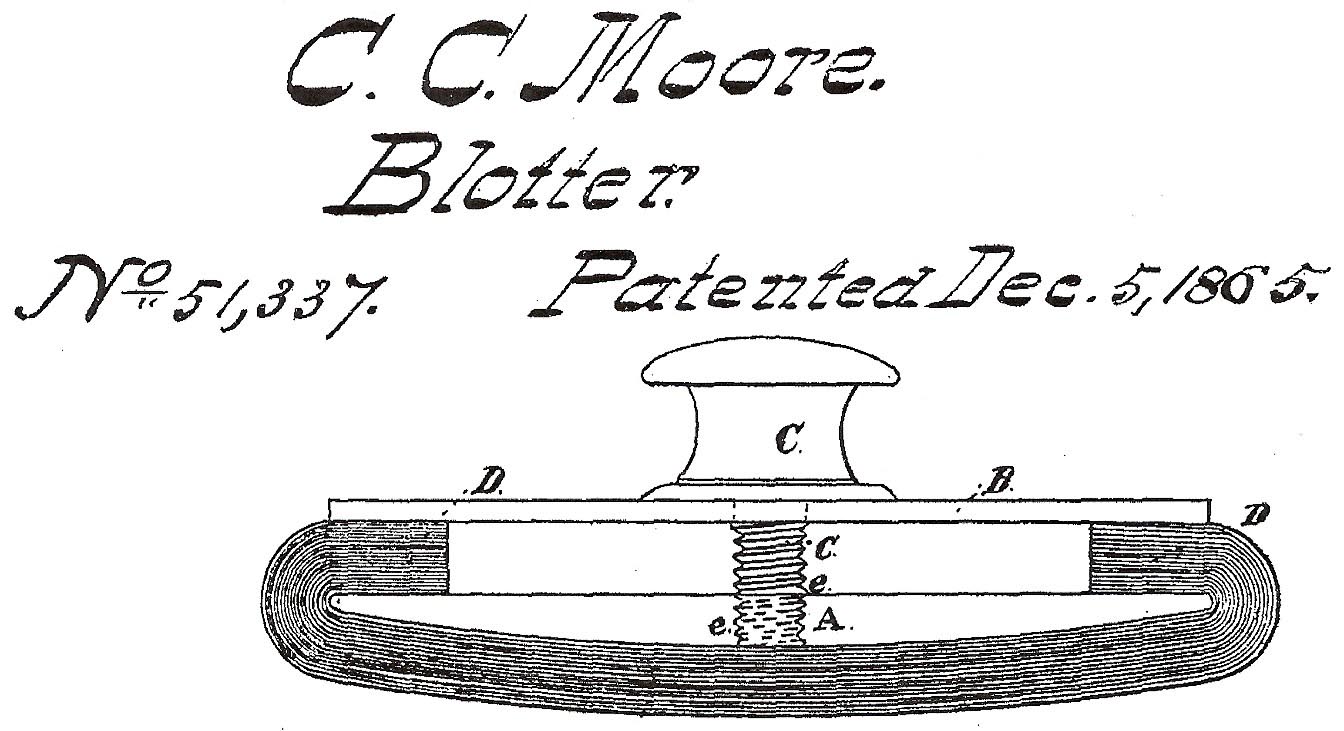 The Hagley Museum and Library has an 1878 ad for Moore's cushioned rocker blotters. 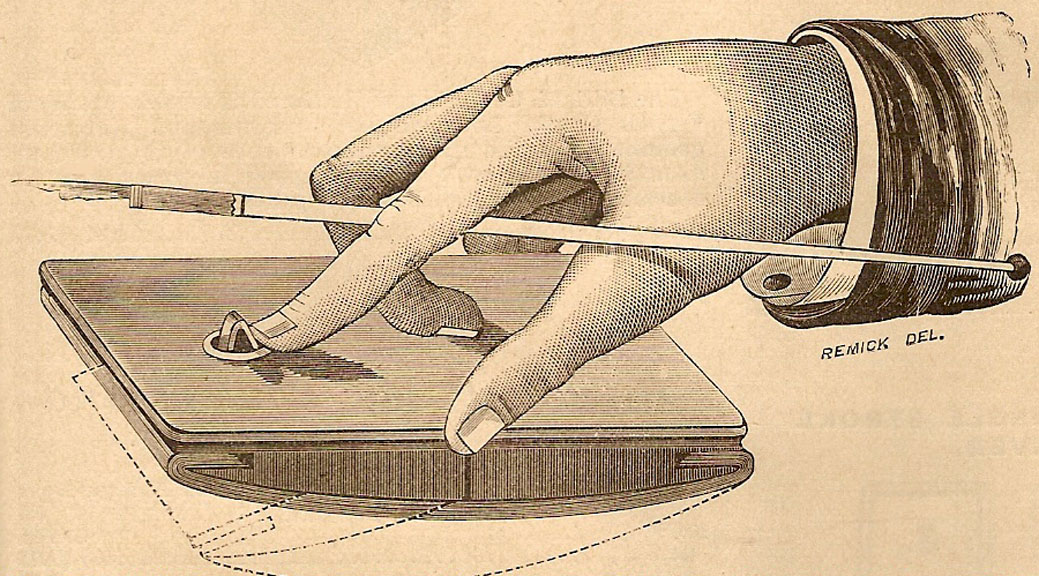 Excelsior Blotter, patented 1880, advertised 1883 |
. | . |


Penmanship
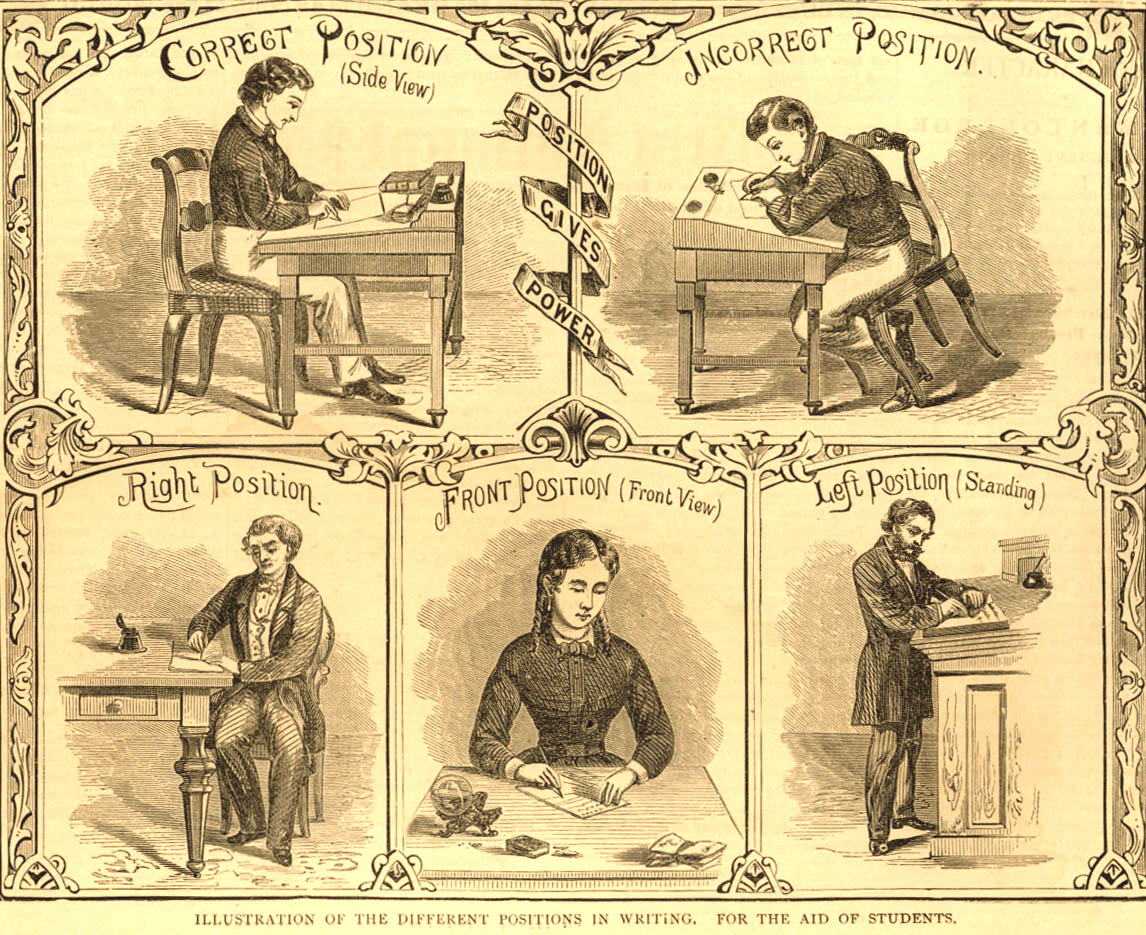

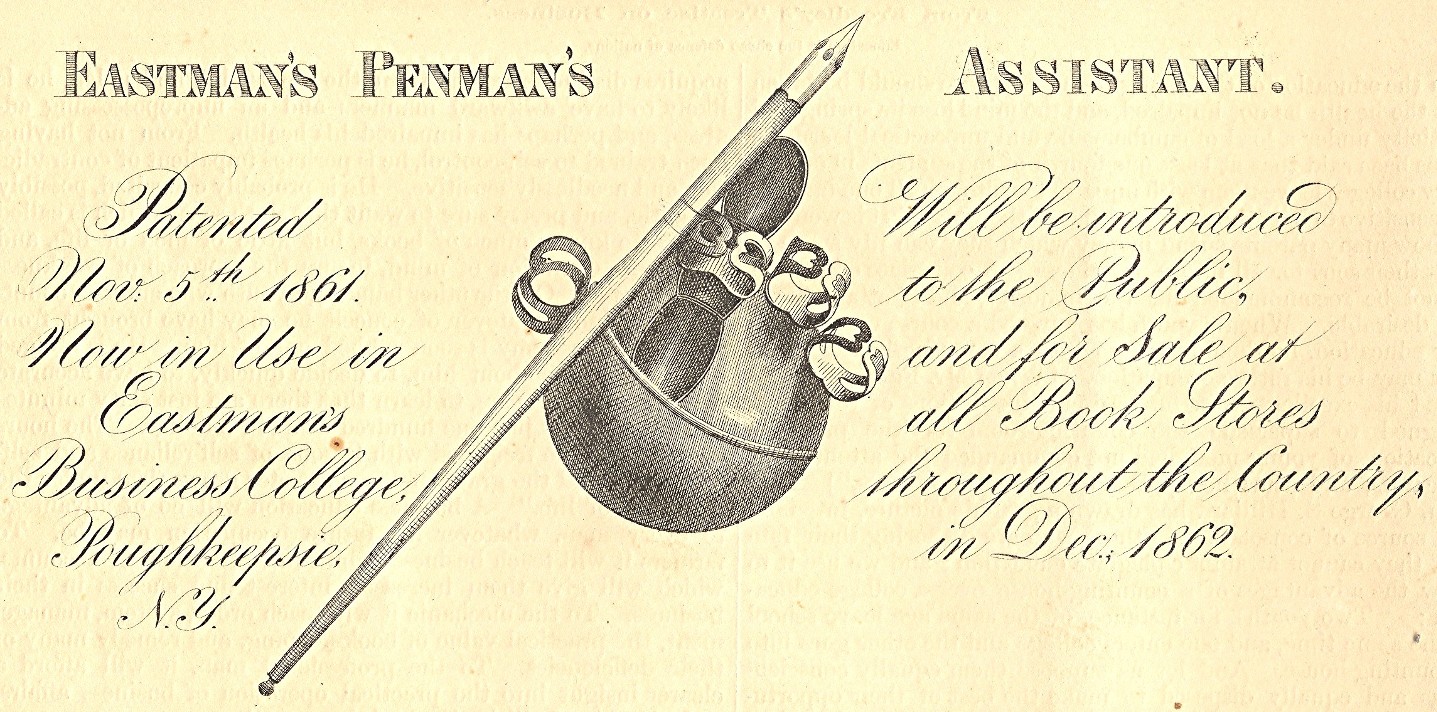
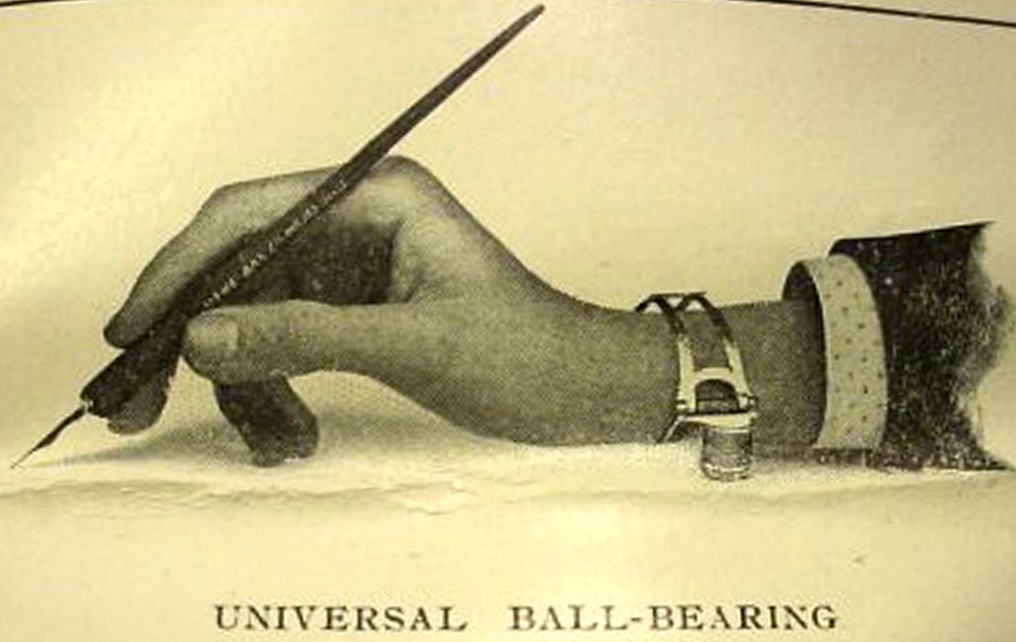
Return to Top
Research Notes:
Charles Slack, Noble Obsession: Charles Goodyear, Thomas Handcock, and the
Race to Unlock the Greatest Industrial Secret of the Nineteenth Century,
2002, states that in the 18th century Joseph Priestly wrote that rubber was used
for rubbing out black lead pencil marks (p. 30); in the early 1800s, the rubbing
out pencil marks remained the only use for rubber (p. 56); around 1825, in the
UK Thomas Handcock began selling high quality erasers made from refined rubber
(p. 60).
English advertisement for black lead pencils, slate pencils, letter writers c.
1814-26? (John Johnson Collection)
US
Patent No. 1625 and No. 1823 awarded to Thomas Woodward 1840 for a pencil
case (mechanical pencil) and No. 2874 in 1842 for a pen case (to hold steel
nib).
Advertisement for India rubber. Dated received 1847. (Earlier in John Johnson
Collection)
Papeterie Marion exhibited at 1851 Crystal Palace.
Advertisement for pen holders c. 1858.
Advertisement for sealing wax, c. 1850-60.
Record of purchases of pen holders,
steel erasers 1869
Advertisement for mucilage, 1870
Advertisement for pen
knives, rubber erasers, pencil cases (mechanical
pencils) 1878
Advertisement for rubber ink erasers 1884
J. M. Batchelder, inkstand, US patent no. 20,028, April 27, 1858.
Thomas S. Hudson, pen cleaner and holder, US patent 20,065, April 27, 1858.
D. W. Wright, combination paper weight and pen holder, US patent 66,547, July 1
[7?], 1867