Early Office Museum
Antique Single-Element Typewriters
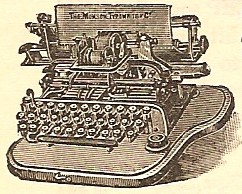
Munson Typewriter, 1896 ad
Single element machines used type-shuttles, type-wheels,
or type-sleeves rather than type-bars. These type-elements rotated and
moved either up and down or side to side to position the correct
letter. One of the selling points of most single-element typewriters was that
the type-elements could be changed to permit typing in different fonts and
languages. Both Hammond and Blickensderfer sold over 100 different
type-elements. Key tops could be changed to facilitate typing in different
languages. It is reported that most single-element machines were
slower than typebar machines because the single-element returned to its
base position between characters.
|
|
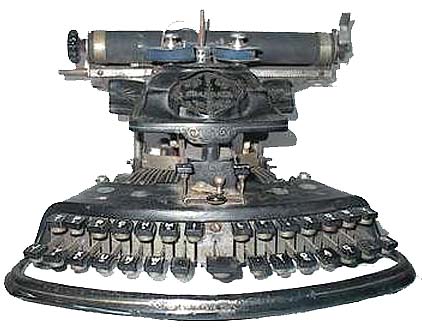
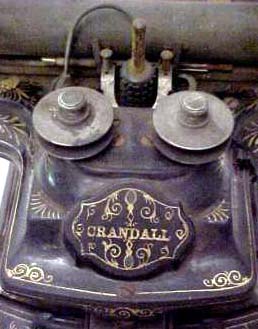
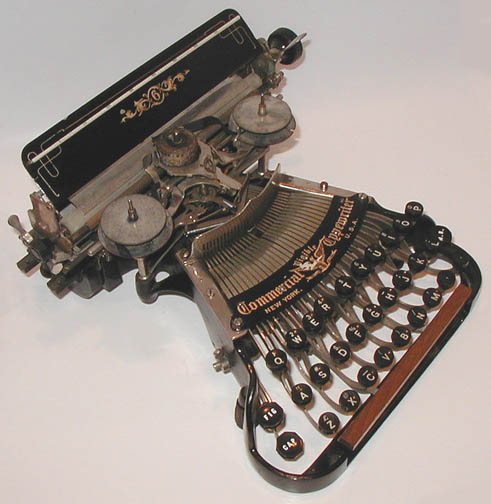
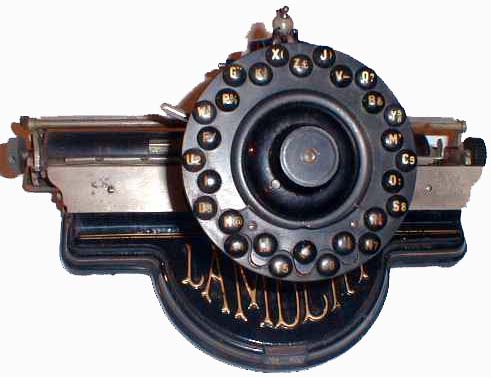
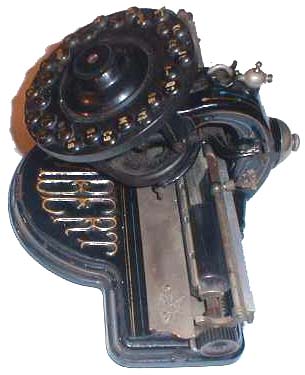
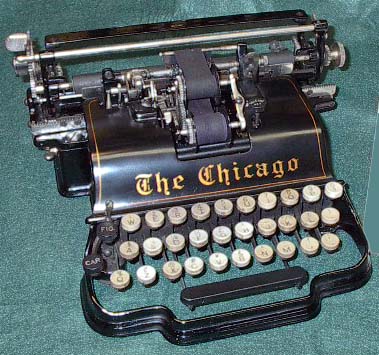
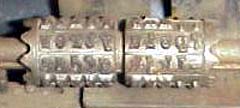
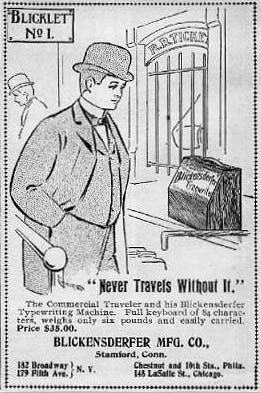
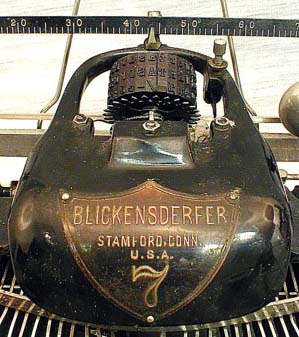
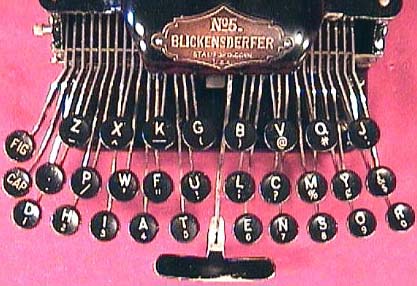
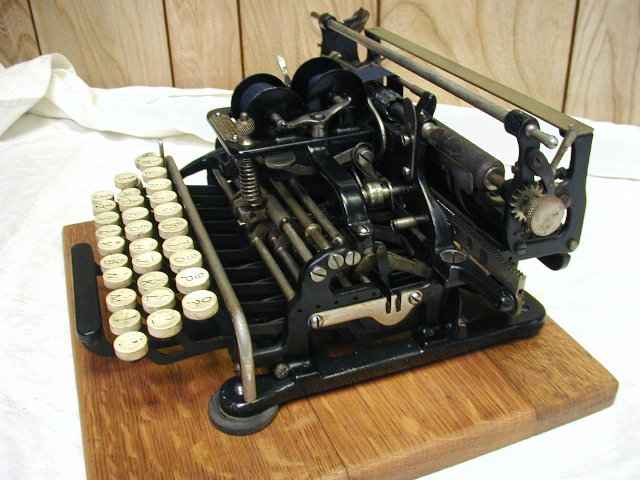
~ Crandall ~ Chicago ~ Blickensderfer ~ The most successful early single-element machine, the Hammond type-shuttle typewriter, is described in our Antique Office Typewriters gallery. Some other single-element machines were the Crandall Typewriter (early 1880s), Munson Typewriter (1889)/Chicago Typewriter (1898), Blickensderfer Typewriter (1893), Commercial Visible Typewriter (1898), Keystone Typewriter (1899), Lambert Typewriter (1900), Postal Typewriter (1902), McCool Typewriter (c. 1909), and the miniature novelty Junior Typewriter (1907)/Bennett Typewriter (1910). The Rem-Blick Typewriter (1928), which was a copy of the Blickensderfer No. 5, was sold by Sears under the brand name Blick Typewriter (c. 1930). All of these other single-element machines were sold at prices significantly below those of upstrike typewriters and the Hammond. Nevertheless, none of the other single-element machines appears to have had substantial sales for office use. In any event, we have not found claims by other single-element machines that significant sales were made to government or corporate offices, and we have not found them in early office photographs. Single-element typewriters typed in two different ways. On several of the machines, a hammer moved forward from the rear and hit the paper against the type. This was true of the Hammond, Munson/Chicago, Commercial Visible, Keystone and McCool. On a number of other single-element typewriters, the type element moved and struck the paper. This was true of the Blickensderfer, Lambert, Postal, and Junior/Bennett. The Munson No. 1 weighed 16 lb. and was advertised in 1893 as "the most portable standard machine in existence." The Munson No. 2, like the Chicago, was an enclosed machine. Munson advertised that the No. 2 was designed for typing manifolds, or multiple carbon copies. The Chicago was offered with a standard or a wide carriage. The existence of a wide-carriage model may suggest that the company was marketing machines to offices. In 1902, the Chicago Writing Machine Co. advertised that it had sold 26,000 Chicagos in the three years since they were introduced. An ad claimed that 75,000 Chicagos were in use at the beginning of 1915. (System, Jan. 1915.) The Chicago was marketed by Sears, Roebuck & Co. under the name Draper. The Blickensderfer Typewriter, which used a type-wheel, was the first successful portable keyboard typewriter. (See ad to right.) In 1905, the company claimed that 100,000 of its machines were in use. By the time production of Blickensderfer type-wheel models ceased in 1918 or 1919, about 200,000 such machines had been produced, judging from serial numbers. The Lambert has a circular keypad and a type-element in the form of a circular convex plate. When the operator presses a letter, the keypad tilts, the type-element pivots, and the appropriate letter prints. Complete with carrying case, the Lambert weighs under 9 lb. In 1993, it was estimated that a total of about 30,000 Lambert machines were made in the US, England, and France. (ETCetera No. 24, Sept. 1993) Prices of Early Single-Element Typewriters
|
|